CS2 vs Valorant 2026 — which competitive shooter should you play?
CS2 and Valorant are the two biggest competitive shooters in 2026. This comparison covers gameplay, ranking, monetization, esports scenes, and the player experience. Pick the right one for your playstyle.
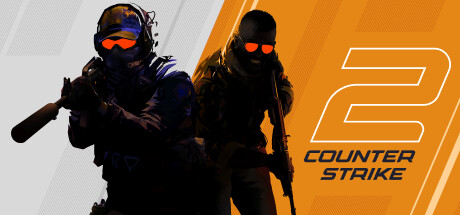
CS2 and Valorant are the two biggest competitive shooters in 2026. CS2 has the higher concurrent player count (~1.2M on Steam alone) but Valorant has the bigger ranked ecosystem and the deeper esports scene. Both are free-to-play, both run on modest hardware, and both have decades of design history behind them. The "right" choice depends on what you value.
This comparison is current as of August 2026, after the CS2 Cache update (July 9) and the Valorant Episode 9 Act 3 (August 6).
Quick verdict
Pick CS2 if: you want a pure aim-skill shooter, you prefer longer matches (30-40 minutes), and you want a more established modding community.
Pick Valorant if: you want a deeper ability system, you prefer shorter matches (20-30 minutes), and you want a more forgiving competitive ecosystem (ranked is less punishing on loss streaks).
Gameplay comparison
Time to kill (TTK)
Both games have fast TTK (under 1 second with headshots), but the feel is different:
- CS2: the AK-47 one-taps to the head at
any range. The AWP one-shots anywhere on the body. The TTK is the most consistent in the genre — no random spread, no random crits. Raw aim skill is the only thing that matters.
- Valorant: the Vandal one-taps to the
head. The Phantom doesn't one-tap but has a faster fire rate and silencer. The Operator (AWP equivalent) one-shots anywhere. TTK is similar to CS2, but abilities add a second layer — you can die to utility (Cypher tripwire, Sova shock dart) without ever seeing the enemy.
Winner: CS2 (more pure aim), but Valorant's ability layer is a feature, not a bug.
Movement
- CS2: the movement is "realistic" —
you can counter-strafe to throw off enemy aim, you can bunny-hop (rare in competitive), and the air-strafing is a key skill for high-level play.
- Valorant: the movement is similar to
CS2 but with agent-specific abilities (Jett's dash, Reyna's dismiss, Raze's satchel). The abilities add verticality and momentum that CS2 doesn't have.
Winner: tie. CS2 has more depth per mechanic; Valorant has more variety per agent.
Map design
- CS2: 8 active-duty maps (after the
July 9 update that added Cache and removed Overpass). The maps are large, have multiple routes per bomb site, and reward utility usage.
- Valorant: 11 maps (after the Episode 9
Act 3 update). The maps are smaller, more corridor-based, and reward ability usage more than raw aim.
Winner: CS2 (more variety, more depth per map), but Valorant's smaller maps are easier to learn.
Competitive ecosystem
Ranked mode
- CS2 Premier: 9 divisions (Bronze to
Top 500), season soft reset every 2 months. The Top 500 leaderboard (added in 2024) is the most competitive ranked mode in the genre. Matchmaking is solid but the "smurf" problem (experienced players using new accounts) is real.
- Valorant Ranked: 9 tiers (Iron to
Radiant), season soft reset every 6 months. The Radiant leaderboard (top 500 players per region) is the most competitive ranked mode in any FPS. Matchmaking is excellent and the anti-cheat (Vanguard) is the strictest in the industry.
Winner: Valorant (better anti-cheat, less smurfing). CS2 Premier is improving but still has problems.
Pro scene
- CS2 esports: 8 major tournaments per
year, $20M+ total prize pool across the circuit. The IEM Katowice, PGL Major, and BLAST Premier events are the biggest. Team Spirit, FaZe, and Vitality are the current top dogs.
- Valorant esports: VCT (Valorant
Champions Tour) is the most-watched FPS esports league in the world. 30+ global events per year, $30M+ total prize pool across the circuit. Sentinels, LOUD, and Paper Rex are the current top dogs.
Winner: Valorant (VCT is more structured, more prize money, more viewership). CS2 has more history but the scene is fragmented.
Monetization
CS2
- Base game: free
- Skins: $0.03 to $1,500 per skin
(Knife skins are the most expensive)
- Cases: $2.50 per case, but most players
earn them for free by playing
- Battle pass: $10 per pass, gives
cosmetics and operation rewards
- Operations: $5-15 per operation
(4-6 per year), includes new game modes and missions
CS2's monetization is cosmetic-only — no pay-to-win elements. The skin economy is the most established in gaming (some skins sell for $50K+ on the Steam marketplace).
Valorant
- Base game: free
- Agents: free (you can unlock any agent
by playing the game; previously cost ~$10 per agent but the game went F2P for all agents in 2023)
- Skins: $5 to $150 per bundle, with
"battle pass" skins ranging from $10-25
- Battle pass: $10 per pass (~$5 for
the cheaper pass), gives cosmetics and agent unlock tokens
- Store skins: rotate daily, premium
skins can cost $50+
Valorant's monetization is also cosmetic-only — no pay-to-win elements. The skin economy is newer but growing fast.
Winner: CS2 (deeper skin economy, more variety in pricing). Valorant's skins are higher-quality but more expensive.
Player experience
Match length
- CS2: 30-40 minutes per match (MR12
format)
- Valorant: 20-30 minutes per match
(MR13 format)
Winner: Valorant (shorter matches are better for solo queue).
Toxicity
- CS2: voice chat is opt-in, text chat
has some moderation. Toxicity is moderate — the Mute button is your friend.
- Valorant: voice chat is opt-in, text
chat has aggressive moderation. Riot's "behavior score" system is the strictest in the genre. Toxicity is lower than CS2 in the same MMR range.
Winner: Valorant (less toxicity, better moderation).
Anti-cheat
- CS2: VAC (Valve Anti-Cheat) is the
weakest in the genre. The cheating problem is real, especially in high-MMR lobbies.
- Valorant: Vanguard is the strictest
anti-cheat in the genre. Kernel-level access, hardware bans, AI detection. Cheating in Valorant is rare at all MMR levels.
Winner: Valorant (Vanguard is far better than VAC).
System requirements
- CS2: runs on a GTX 1060 / RX 580
at 60+ FPS on low settings. Source 2 is moderately demanding.
- Valorant: runs on a GTX 1050 / RX 560
at 60+ FPS on low settings. Valorant is one of the most optimized competitive shooters.
Winner: Valorant (lower minimum requirements).
Which game should you play?
Play CS2 if you:
- Want the most pure aim-skill shooter
- Prefer longer, more strategic matches
- Want the deepest skin economy
- Have a high-end PC
- Like the Counter-Strike franchise (1.6,
Source, Global Offensive)
Play Valorant if you:
- Want a deeper ability system
- Prefer shorter, more action-packed matches
- Want a more forgiving competitive ecosystem
- Have a low-end PC
- Like Riot Games' art style and design
Play both if you:
- Love competitive FPS and have time for
both
- Want the deepest possible competitive
shooter experience
- Play on PC with at least a GTX 1060
- Don't mind two ranked grinds
FAQ
Is CS2 or Valorant more popular in 2026?
CS2 has more concurrent players (~1.2M on Steam) but Valorant has more active ranked players (Riot doesn't publish numbers, but estimates put it at 15-20M monthly active ranked players). Both are massive.
Which is harder to climb ranked in?
Valorant is harder. The Radiant tier (top 500 per region) requires a 90%+ win rate in Diamond. CS2's Global Elite is more accessible — most Master-level players can reach it with a 60% win rate over 100 matches.
Which has better anti-cheat?
Valorant (Vanguard) is significantly better than CS2 (VAC). Cheating in Valorant at high MMR is rare; cheating in CS2 at high MMR is a constant problem.
Can I transfer my CS2 skins to Valorant?
No. The games use different economies and different marketplaces. CS2 skins stay on Steam; Valorant skins stay in the Valorant client.
Which is better for low-end PCs?
Valorant — it runs on significantly less hardware. CS2 needs at least a GTX 1060 for 60+ FPS; Valorant runs on a GTX 1050.
Which has more pro tournaments?
Valorant (VCT has 30+ global events per year). CS2 has fewer but larger events (IEM Katowice, the Majors).
Which is better for solo queue?
Valorant — the matchmaking is more forgiving on loss streaks, the anti-cheat is better, and the toxicity is lower.
Should I play both?
Most competitive FPS players in 2026 play both. They have different design philosophies but both reward aim skill. Start with the one whose gameplay loop you prefer, then add the other if you have time.
About 7 minutes read.